From Megaprojects to Manufactured Infrastructure
Traditional nuclear projects are defined by complexity: site-specific construction, long schedules, and unpredictable outcomes. Kadmos takes a fundamentally different approach.
We treat advanced nuclear energy like industrial infrastructure. Most of the critical work—fabrication, integration, inspection, and testing—happens in controlled factory environments. By the time a Kadmos unit arrives on site, it is largely complete, verified, and ready to install.
This shift from field construction to factory manufacturing delivers three decisive advantages:
- Schedule certainty through standardized build and installation sequences
- Cost control driven by repetition rather than one-off engineering
- Higher reliability by eliminating many early-life failure modes
For investors and customers alike, this translates into faster deployment, lower execution risk, and predictable performance.
Designed for Stable, Low-Risk Operations
Kadmos systems are designed to operate as steady, predictable assets. Day-to-day operation is centered on maintaining stable output rather than constant intervention, supported by conservative design margins and strong inherent stability.
Automation handles routine control functions locally, while independent protection systems enforce safety boundaries. Centralized monitoring enables fleet-wide visibility and performance optimization, without introducing remote operational risk. This architecture allows Kadmos to scale operations efficiently while maintaining a clear separation between monitoring, control, and safety.
The result is an operating model that looks far more like industrial energy infrastructure than traditional nuclear facilities: disciplined, repeatable, and staff-efficient.
Manufacturing as the Core Value Driver
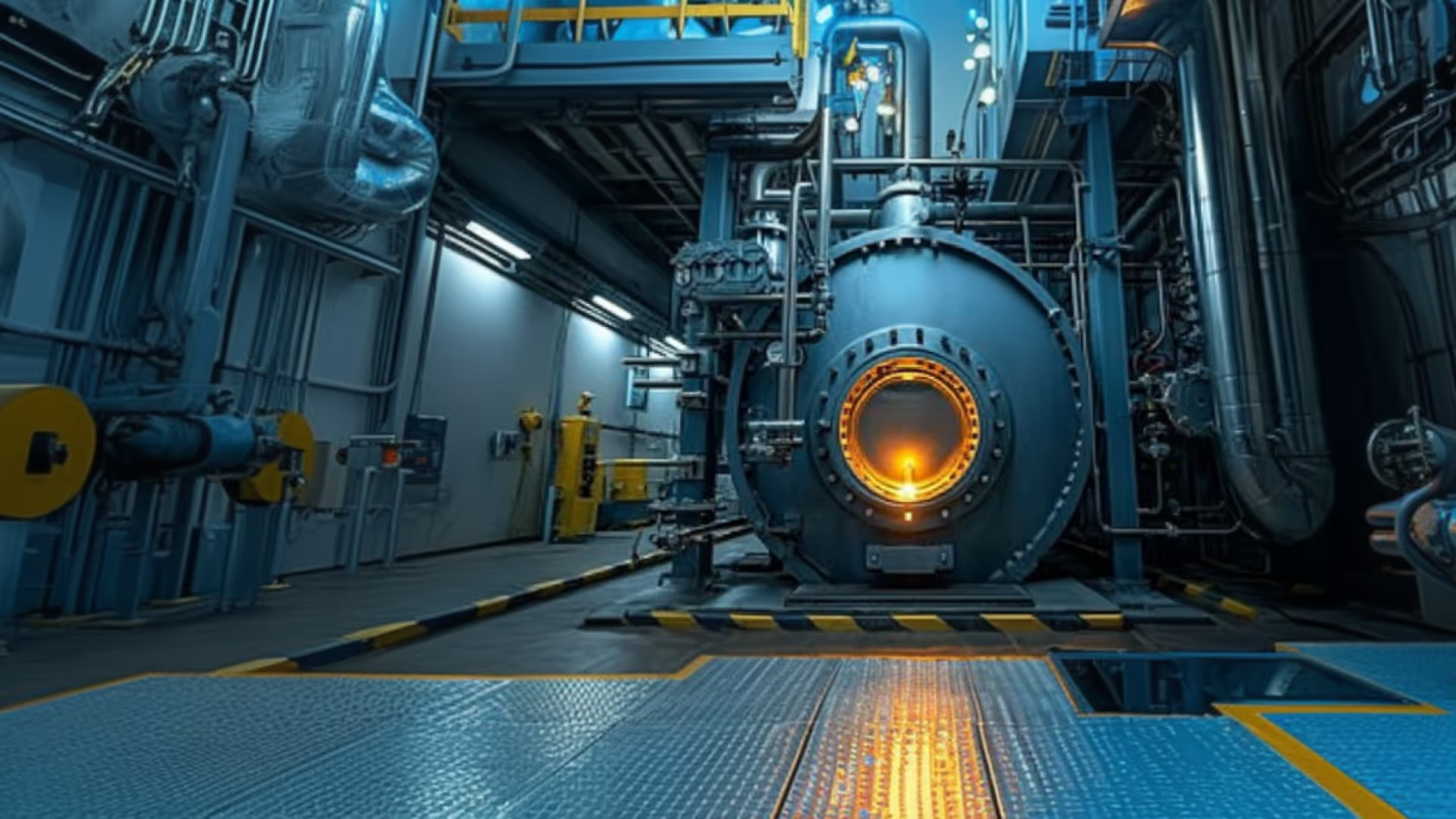
At Kadmos, manufacturing is where value is created. Each unit is produced under strict configuration control, with traceability and quality embedded into every step of the process. Systems that are traditionally assembled and debugged on site are instead integrated and validated in the factory.
This approach significantly reduces commissioning risk and accelerates the transition from delivery to revenue generation. It also enables continuous improvement across units—every build benefits from lessons learned on the last.
For investors, this manufacturing-centric model supports scalability and margin expansion as production volumes increase.
Rapid, Standardized Deployment
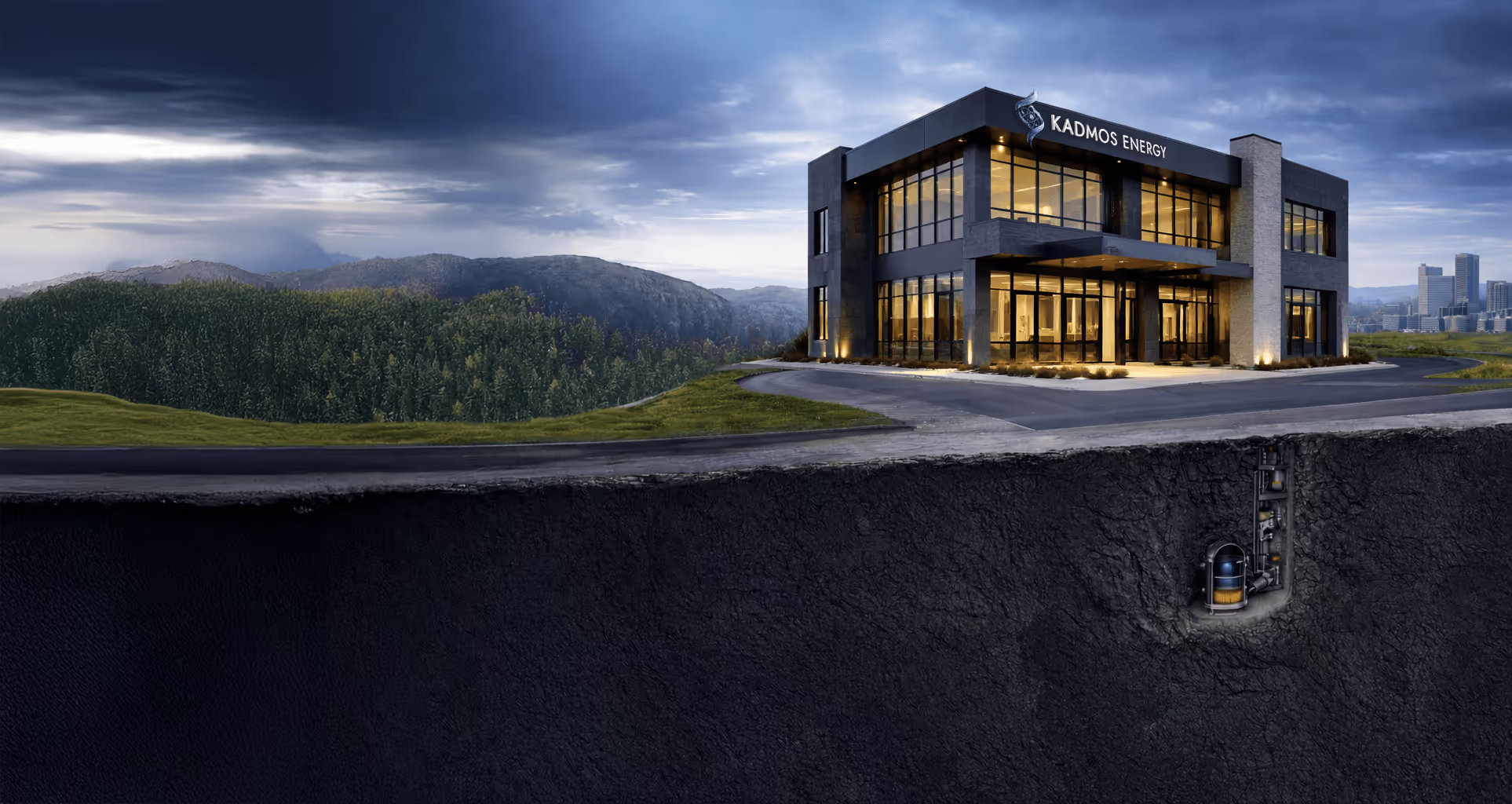
On site, Kadmos units are installed rather than built. Deployment focuses on placing completed modules, connecting predefined interfaces, and verifying readiness—dramatically reducing construction scope, labor requirements, and schedule exposure.
This standardized installation approach enables deployment in locations that are poorly suited to traditional power plants, including constrained industrial sites and critical infrastructure facilities. It also allows customers to plan projects with far greater confidence in timelines and costs.
.avif)
Disciplined Commissioning and Fast Time to Revenue
Commissioning follows a structured, stepwise process designed to validate performance without surprises. Mechanical, electrical, and control systems are verified before full operation begins, ensuring that each unit performs as expected when it enters service.
By the time a Kadmos unit reaches commercial operation, it has already demonstrated stable output, predictable control behavior, and reliable performance—reducing early operational risk and accelerating time to contracted revenue.
Fleet Operations Drive Long-Term Value
Kadmos is not operating isolated plants—it is building a fleet. Each deployed unit contributes data and operational insight that improves performance across the entire portfolio.
A lean on-site team is supported by a centralized fleet organization that monitors performance, identifies emerging issues early, and coordinates maintenance and service activities. This model improves availability, reduces unplanned downtime, and lowers lifetime operating costs.
As the fleet grows, Kadmos benefits from operational leverage: more units, better data, stronger performance, and improving economics.
Energy as a Service, Not Just a Product
Kadmos delivers power as a service tailored to customers who value reliability, resilience, and predictability. Target customers include data centers, industrial facilities, government installations, and other critical infrastructure operators.
Energy can be delivered through flexible commercial structures, including long-term power purchase agreements or build-own-operate models that bundle operations, maintenance, and lifecycle services into a single offering.
Beyond electricity, Kadmos systems can support resilience services such as islanded operation and grid support—capabilities that create additional value streams and strengthen customer relationships.
Lifecycle Responsibility Built In
Kadmos is designed with the full lifecycle in mind. Fuel services, long-term maintenance, and end-of-life removal are planned from the outset, reducing uncertainty for customers and investors alike.
This disciplined lifecycle approach supports long-term contracts, predictable cash flows, and strong alignment between Kadmos and its customers over decades of operation.
A Scalable Platform for Reliable Power
Kadmos is building more than individual power plants—we are building a scalable energy platform. By combining manufactured systems, standardized deployment, fleet operations, and service-based commercial models, Kadmos offers a credible path to delivering clean, reliable power at scale.
For customers, this means dependable energy without operational burden.For investors, it means a business designed around repeatability, risk reduction, and long-term value creation.